I basically spend my time camping out in one of two very specific realities (1) no way am I as good or as qualified as that particular person perceives me to be and/or I am definitely not good enough for that and then there’s (2) surely all of my skills and strengths suit in me for this and why is no one suggesting such?
I am still waiting for some mysterious person to tap me on the shoulder and say, “yes, you!” To suggest they have been watching and have seen all that I do and am and could possibly be and want to lead me, knowingly, ahead to all I could potentially become. With such affirmation and gentle encouragement that suggests a level of relationship we do not have but perhaps instead infers their very keen insight. That they would maybe perceive me better than I do myself. And encourage me when I’m in metaphorical camp “one” and nod agreement in camp “two.” When the fact of the matter is perhaps I should know and advocate for myself? To which my imposter syndrome¹ mockingly laughs at me whenever I dare attempt such a thing. You? Hahaha surely not. And we’re back in camp one, folks.
This is going to sound braggy, but remember we’re reading this from the perspective of camp one, dear reader. I had the daunting task of asking some senior staff to complete an outrageously long survey on my behalf, asking about my competence as an educator, etc. I was nervous about asking them and even more so as I awaited the data. There was much cushioning about the feedback and we were warned not to linger on the ‘comments of criticism,’ knowing full well that is what one does. When it came back I was surprised to find – I did not have criticisms. I was given suggestions for next steps, but not a single criticism. My feedback was overwhelmingly positive. But how so? Am I not just basically competent? I read and reread this feedback looking for anything between the lines inferring my weaknesses and supporting my view of self and came up empty.
This led to two significant observations, not paired with the camps (or maybe they are) (1) why do I have to go through this process to get positive feedback? If I am perceived as such an ‘astute practitioner’ why didn’t anyone tell me? Why don’t we tell people how great they are? Or good? (2) I need to figure out this self-advocacy business and make peace with the imposter syndrome which is clouding my judgment.
I don’t think Gandalf is going to knock on my door anytime soon, if I’m being honest, I’d prefer McGonagall anyhow. I could get all philosophical to try to determine the root of my imposter syndrome, but to what end? I love the “eldest daughter with anxiety meme” I feel that captures the essence:²
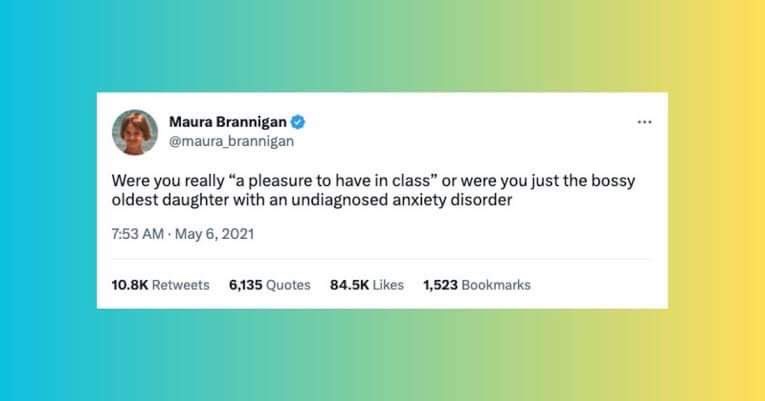
My bestie and I joke about this all the time – it may be the underlying theme in the reels we send to each other. Like my bestie, the people you surround yourself with are important. Do they lift you up? Are they encouraging? Do they know you well enough to tell you when your self-talk is on the right track and when it is so far off course that perhaps you have mistaken yourself with a fictional character? Likewise, are you that person for them? Do you let others know when they are great and when they are good? I can affect the culture of my team, of my friendship group, of my environments by being a person who is encouraging, affirming and lets other people know when I think they are great. Who expresses gratitude and encourages them to be proud of themselves, who applauds loudly and privately. So can you. Even if it is not reciprocated – maybe especially then.
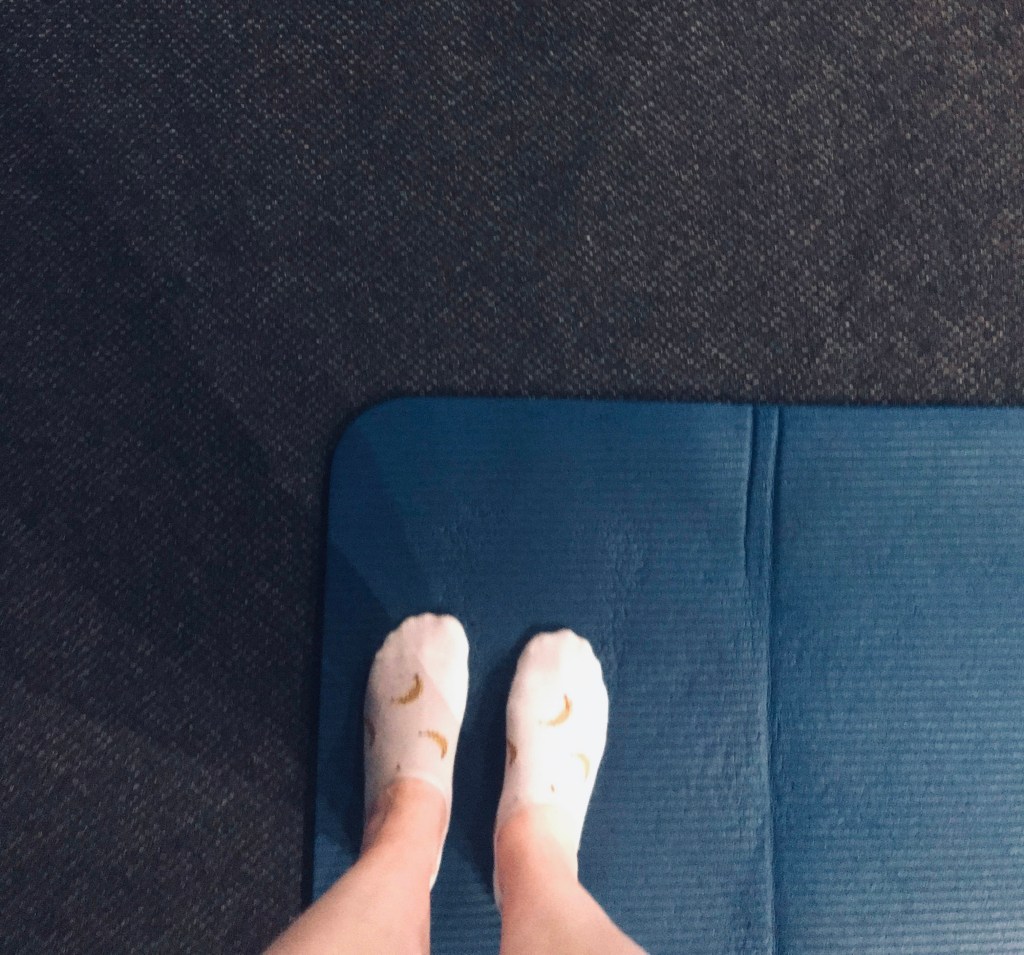
This evening I was 10 minutes early to my exercise class, not ‘actually’ early, but the agreed upon time to get there in order to be prepared for class. Mostly, to have your mat ready and be well-positioned in the room. I was not, can you believe it, late. Even having arrived ten minutes early, the room was already full. Instead of my favourite spot (creature of habit here), roughly in the middle to the left, I had to take a spot at the front. Not near the front, AT the front. The front was to be avoided at all costs, yet here I was. AT the front, for a full 10 minutes prior to the class dreading what was about to unfold. I found during the class I was less self-conscious than normal. I couldn’t see anyone in front of me and so I was less concerned with others looking at me. I was close and concentrated on the instructor and my own movements. I also feel like I did better in the class because I was less distracted by everyone else.
Afterwards I thought of self-advocacy and I wondered about the parallels. About how advocating for ourselves seems difficult mostly because we are drawn to think about what others are doing. Where someone else is at in comparison to ourselves. How they might be better positioned or equipped or more talented, or how sometimes the self-advocacy of others comes across as distasteful arrogance. I wondered, if we concentrated less on what others were doing, would we be better at advocating for ourselves and taking our ambitions and accomplishments more seriously? And by extension, be willing to communicate them to others in a somewhat humble self-promotion? Or at the very least be willing to own them.
I have been trying to advocate for myself and I have hated it. I drafted an email and rewrote it and over-thought it and drafted it again, then sent it. Like my experience in the class, it was fine. I got a lovely, helpful reply and no one seemed to think it was inappropriate of me to send this email or request their time and advice. (What? She thinks, how?) I have hated it and found that it wasn’t so bad, I have hated it and been ok and possibly been better for it.
The absolutely absurd task of advocating for yourself is horrid and I most definitely hate it, but you know what, it wasn’t the worst.
If you, like me, spend a lot of time in camp one, I would encourage you to try advocating for yourself. You will probably hate it, but it will also probably be fine. More so, I would encourage you to let other people know when they are great and also when they are good. Maybe less of us would be hanging out in camp one if we were all a little bolder in offering our applause and our affirmations to others.
And hey, maybe position yourself at the front next time, even if the room is empty.
Go well
Steph
¹ I was delighted to find that Lime Cordiale have released a song entitled Imposter Syndrome (2023) and perhaps if you relate to what I’ve shared here, you’ll enjoy this also. Particularly the lines “Wise guy told me I’m intelligent / That makes him an idiot” and “Lucky you see me through frosted windows.” Listen/watch here: https://youtu.be/gpvMGTlNcK8 You’re welcome.
² Maura Brannigan, 2021. (Twitter: @maura_brannigan)
 letters and lattes
Leave a comment