Last week I had the opportunity to attend a PD session. On the outside, it appeared to be for me and my development, time away to learn and reflect. In one session the leader, a Priest, read an email from a dear friend of his. This friend was dealing with “a new normal” and balancing the everyday normalcy, like running errands, but with a new, difficult burden. Many of us can relate to this – facing life with the weight of grief. The normal everyday rhythms with the new complexity of sickness or a diagnosis which requires attention and action. The shift of adapting to a “new” normal which feels anything but familiar where there is simply the matter of this: getting on.
Her new rhythm was living in constant conflict, a Jewish woman in Israel. In her email she detailed going to the chemist when a bomb warning sounded. It detailed finding shelter with strangers. It spoke of her grief, worry and fear as she adapted to a new life, feared for her sons and felt the world villainizing her government who were left to build and breed violence by the world for years.
As we listened to the reading of this letter, the weight of the room shifted. The Priest made his point and continued in his message of courage. However, we his audience, were elsewhere. We were still on the street with that woman. We were with her, wondering how she has managed in the past few days, where is she now?
There is no doubt the world is in a time of turmoil. It is not the first time and, dare I say, it won’t be the last. It is easy to be overcome by the devastation of it all. To be overwhelmed by the senselessness, the violence, the loss of life. The bleak reality becomes too much and we turn away. Sometimes we need this reminder: the singular amongst the many. The individual in the group. The person to call us again to this: compassion.
When we come focused on who is the enemy, making sides or generalising groups, we step away from compassion. This is the issue of depersonalisation. Rich Villodas unpacks the issue of depersonalisation as:
“When we are shaped to generalise unique, unrepeatable individuals, it makes it easier to keep them at arm’s length or treat them with hostile force. Doing this is the practical core of much bias and injustice…The great temptation is to see not people but socially constructed amalgamations of entire people groups… Depersonalisation is a weapon of the powers because if we can avoid the nuances of an individual’s journey, we can comfortably refrain from relating to that person in a way that requires careful discernment.”¹
Rich Villodas, Good and Beautiful and Kind: Becoming Whole in a Fractured World, p.36.
This was the effect of hearing the email, we shifted from a depersonalized view of an issue far removed, to that of an individual’s journey.
Can we call ourselves Christians if we are not stirred to compassion? Is compassion real if it is without action?
I love Furlong’s reflections on this in Small Things Like These. He is positioned against the ingrained and institutionalised abuse of others, he finds himself no longer blind to the reality and confused by those who are turning a blind eye. He asks himself, “Was there any point in being alive without helping one another?”² With contempt, he challenged societal blindness and those who chose to not be brave, to not face what was there “and yet call yourself a Christian.”² But positioned against the powers, he feels powerless to stand up and unwilling to turn a blind eye. And yet, (spoiler) he chooses to act, offering grace, kindness and compassion. In the small ways he is able.
Likewise, how can we extend grace and compassion? In the small ways we are able.
Rainn Wilson suggests, “Compassion and service are the answer to our mental health epidemic. When we widen our perspective beyond ourselves.”³ When we act in compassion for those known to us, whom we love, we willingly do so sacrificially. Giving of our time or resources, choosing to use this to act in compassion for another. As we resist depersonalisation, we can widen the reach of our compassion. In his conversation, Wilson shared his belief that, “Encouragement is the most pure form of service we can offer another human being.”³ Our encouragement to others is an act of service, an extension of grace and compassion to another.
Whether it is encouragement in a difficult season.
Encouragement for a job well done.
Encouragement when the weight of the world is too heavy.
What can we possibly do when faced with the insurmountable hurt and injustices of the world? We care.
We act.
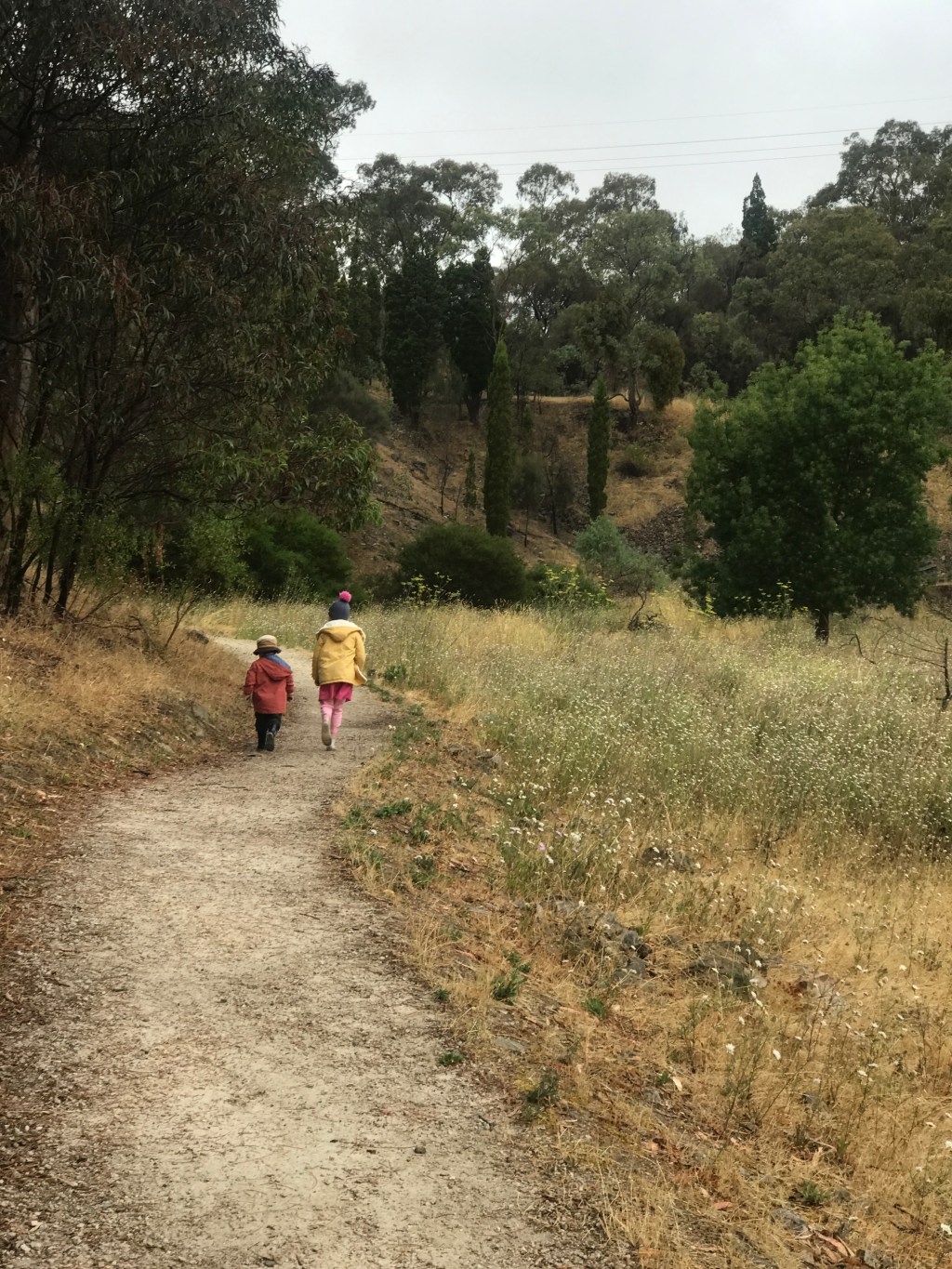
We step out in compassion – one small step at a time.
We hold onto hope – hope for change, for goodness.
We don’t turn away.
We don’t hide.
We don’t become numb to the atrocities of the world.
We refuse to be blind.
And it might not seem like much. But we don’t let the impossibility of changing the world stop us.
Dear Reader, may each step of compassion bring you courage.
May each act of encouragement grow your kindness.
May we step out together, with eyes open and hands ready.
Go well
Steph
¹ Rich Villodas, Good and Beautiful and Kind: Becoming Whole in a Fractured World (Colorado Springs: WaterBrook, 2022), p.36.
² Claire Keegan, Small Things Like These (Faber & Faber, 2022), p.50, 51.
³ Kate Bowler, “Rainn Wilson: Brave, Beautiful, and Good Things,” April 2, 2024, in Everything Happens with Kate Bowler (podcast), accessed May 28, 2024, https://katebowler.com/podcasts/brave-beautiful-and-good-things/
 letters and lattes
Leave a comment